Ludwig zieht rote Linie bei Klimapolitik, lässt FPÖ-Event im Rathaus aber zu
Jugendkriminalität und Sozialstaat im Fokus: Wallner skizziert Kurs für Herbstverhandlungen
ÖBB-Deal in Wien-Mitte: Bahnanlagen und Immobilie wieder in einer Hand
Kunasek lobt ÖVP-Koalition, Kickl attackiert SPÖ beim FPÖ-Frühschoppen in Hartberg
Bonvalot-Fall: Vogl verlangt vertrauensbildende Maßnahmen von der Polizei
2026 Tang Prize Award Ceremony Honors Six Laureates
Outstanding Achievements for Global Well-Being and Our Shared Future
TAIPEI, Sept. 18, 2026 /PRNewswire/ -- The 2026 Tang Prize Award Ceremony brought together all six laureates in Taipei on September 18, with five receiving their awards in person and Biopharmaceutical Science laureate Dr. Steven A. Rosenberg taking part remotely. The laureates drew on decades of research, scholarship, and practice to address some of the most pressing challenges facing humanity and share their hopes for the future.
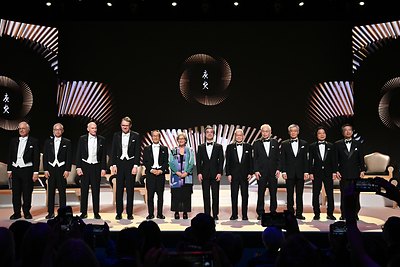
This year marked the first Tang Prize Award Ceremony since the passing of Tang Prize Founder Dr. Samuel Yen-Liang Yin, and a commemorative video was shown in his honor. Dr. Chung-Yao Yin, Chairman of the Tang Prize Foundation, said the framework and spirit established by his father will continue to be carried forward, and that the ceremony represents a continuation of the vision on which the Tang Prize was founded. Academician Chi-Huey Wong, President of the Tang Prize Selection Committee, said the selection committees for all four prize categories have consistently upheld objective, impartial, and professional standards in selecting laureates.
Professor Susan Solomon, the 2026 Tang Prize Laureate in Sustainable Development, noted that today's global environmental challenges may seem just as intractable as ozone depletion once did, but a combination of "science, public engagement, industry participation, and wise policy" enabled humanity to overcome that crisis. She expressed hope that humanity will once again succeed in "the moonshot of safeguarding our environment instead of destroying it."
Among the 2026 Tang Prize Laureates in Biopharmaceutical Science, Dr. Steven A. Rosenberg recalled that four decades ago, his team's work showed that tumor-infiltrating lymphocytes (TILs) derived from patients' tumors could mediate cancer regression, demonstrating that a patient's own lymphocytes could serve as a "living drug" against cancer. The work later led to therapeutic strategies using T cell receptors (TCRs) and chimeric antigen receptors (CARs). Rosenberg called it "a proud example of academic research" that led to lifesaving cancer treatments now available worldwide.
Dr. Michel Sadelain recalled that the idea of targeting CD19 with CAR T cells in the 1990s was rejected by most in academia and industry. He said the only way to advance the concept was to "do it yourself." His team treated its first patient in 2007, and the first CD19-targeted CAR therapies were approved by the U.S. Food and Drug Administration in 2017. Sadelain expressed particular gratitude to "the brave ones who risked their careers when this work was labelled 'science fiction.'"
Dr. Carl H. June said that for patients in the early clinical trials, the question was not whether CAR T-cell therapy was an elegant scientific idea, but whether it could give them more time: "Time with a spouse. Time to see a child grow up. For a child, time simply to grow up." He said patients and their families are "at the heart of this award" because they trusted the research team amid profound uncertainty. He added that whether a treatment reaches the people who need it must be part of how success is measured.
Professor Ge Zhaoguang, the 2026 Tang Prize Laureate in Sinology, noted that Sinology has become a global field of scholarship. Perspectives from different countries and regions are like mirrors held at different angles, together revealing a China that is nuanced and multifaceted. In his view, "the synthesis of East and West, together with pluralism and openness," is the path toward a flourishing field of Sinology.
Professor Bruce Ackerman, the 2026 Tang Prize Laureate in Rule of Law, reflected on growing up in one of New York City's most impoverished neighborhoods in the 1950s. His experience in public schools shaped by John Dewey's philosophy of progressive education encouraged him to explore alternative paths and think independently. At Harvard, he was deeply influenced by John Rawls. To this day, he continues to collaborate with colleagues in academia to explore the underlying sources of the worldwide crisis threatening the future of the rule of law.
Note: Livestream: https://youtube.com/live/DYKirmt37DI?feature=share
 View original content to download multimedia:https://www.prnewswire.co.uk/news-releases/2026-tang-prize-award-ceremony-honors-six-laureates-302883221.html
